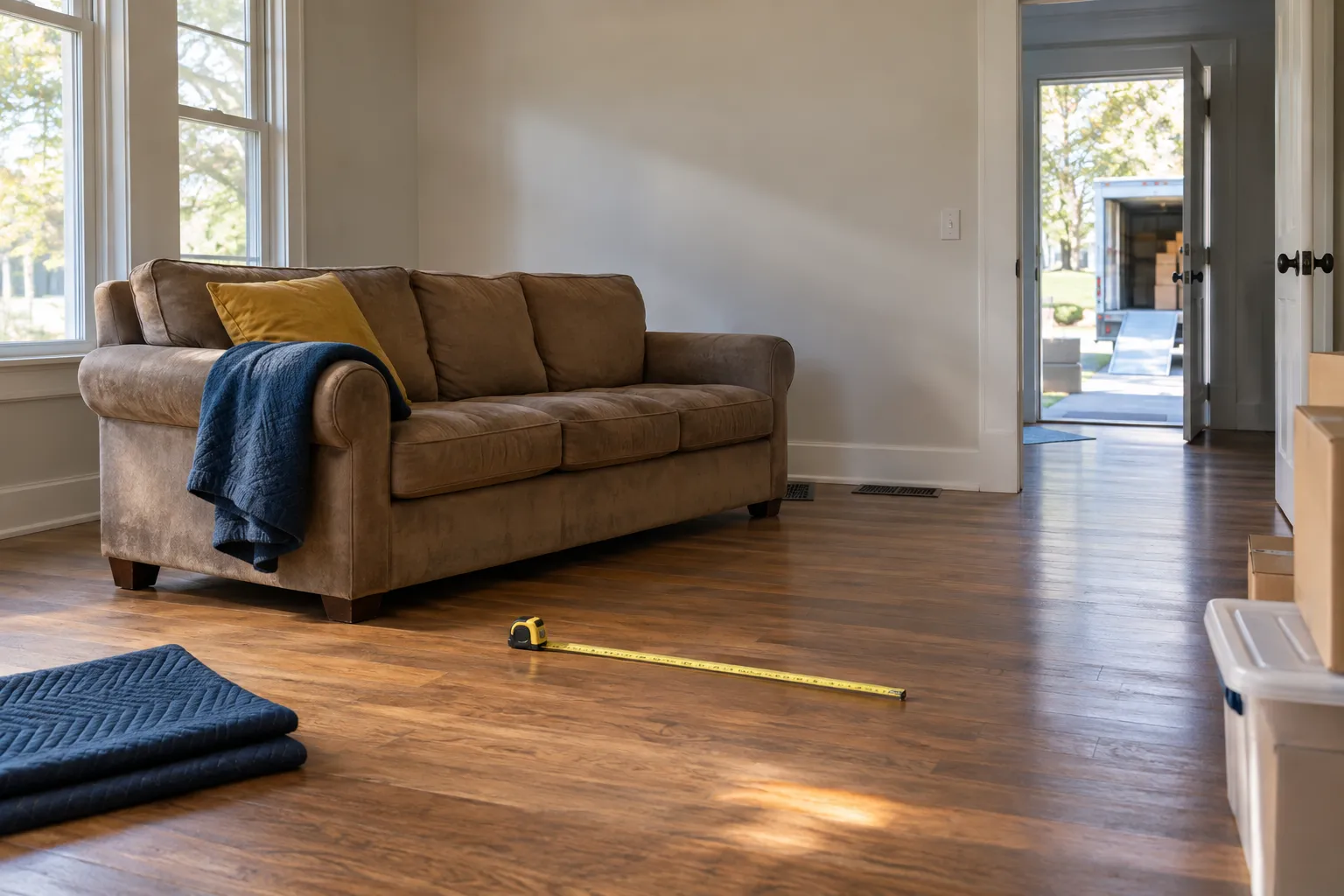
Measure the furniture and the route. A sofa that fits through the front door may still fail at a hallway turn, stair landing, or elevator cab. Record width, depth, height, and diagonal depth for the item, then compare those numbers with the smallest parts of the exit path.
Measure the item
For a sofa, record the widest point from arm to arm, the overall height, the deepest point from front to back, and the diagonal depth from the highest back corner toward the front base. Remove loose cushions before measuring, but treat fixed legs and arms as part of the piece unless the manufacturer’s design allows safe removal.
For tables, bed frames, shelving, and cabinets, note parts that are designed to detach. Put hardware in a sealed bag and attach it to the item only if doing so will not scratch the surface. Do not dismantle a piece if you cannot identify load-bearing parts or safely control the weight.
Measure the path
- Door opening with the door fully open
- Space lost to handles, closers, trim, and hinges
- Hall width before and after every turn
- Stair width, ceiling height, and landing depth
- Elevator door width, cab width, depth, and height
- Exterior steps, railings, porch turns, and gate openings
Use a route comparison
| Finding | Likely next step |
|---|---|
| The item is smaller than every opening, with room to turn. | Confirm floor protection and handling space. |
| The doorway works, but a turn or landing is tighter. | Share all measurements before the appointment; a different orientation or route may be needed. |
| A removable part may solve the problem. | Check the manufacturer’s construction or use qualified help. Do not guess. |
| The item is too large for the verified route. | Stop. Do not force it, damage the building, or attempt unsafe cutting or disassembly. |
Do not turn measurement into a lifting test
Heavy and bulky objects add force, poor grip, awkward posture, and unstable weight. OSHA’s ergonomics guidance recommends devices that reduce force and two-person handling for heavy loads in workplace settings. Its technical guidance also identifies carrying distance, twisting, grip, lift frequency, and space constraints as material lifting factors. Review OSHA’s hazard controls and lifting assessment factors. These sources were reviewed September 24, 2026. They are workplace guidance, not a furniture-specific promise of safety.
Information to share on the call
Give the item type, approximate measurements, floor, stairs or elevator, narrowest opening, and any parts already removed. Photos of the full item and the tightest turn can help explain the route. For a Lancaster moving cleanout, call (202) 555-0134 to discuss the details before removal day.